The God Question
What does the God Question mean and why is it important?
The God Question is one of the many Big Questions which have intrigued mankind throughout history. It examines the origins of life and our universe to establish if they were created or came about by random chance? The reason it is important to consider this, and other Big Questions, is not only to sharpen our mind and intellect but also to put our life in context and give it meaning.
Since almost everything in human experience has a cause, it is natural to assume a First Cause for life and universe. This is referred to as God, the creator of everything known and unknown. Absence of this belief leaves us with no other option but to accept a spontaneous, uncaused creation driven by blind chance. At first glance both options seem irrational and nonsensical because they defy all human experience and comprehension.
Critics of God and religion dismiss belief in God as a virus or delusion arising from ignorance, fear and irrationality. This criticism is partly justified due to the rampant historical corruption and exploitation of belief in God and religion. However, even a cursory study of ancient religious and philosophical texts reveals a well-considered view which takes into account the complexity of the question. It is regrettable that the rational explanations couched in metaphorical language are commonly mistaken by the ignorant and the uninitiated as magic and mumbo jumbo. The critics conveniently overlook the fact that wise people throughout history have always been fully aware and sceptical of magic, sorcery and irrational beliefs.
These ancient texts delve deep into the question and offer some deep and critical insights on God and our existence. Some of these insights are so profound that thousands of years later Science is being forced to acknowledge them! This almost qualifies as a miracle considering that these ancient insights were a result of pure thought well before the development of science and technology available to us today. Is it possible that the ancients were tapping into some fundamental source of knowledge for their insights?
Is the God Question being confused?
I find it curious that of the dozens of books I have read on the God Question, none try to clearly define the God under discussion. Are they talking about Jewish, Christian, Islamic, Hindu God or that of one of the numerous other religions? They all launch into passionate discussion about His existence without specifying the He or She they are talking about. This is a sure sign of ignorance because different religion represent God differently and frequently there is debate even in the same religion about their perception of God.
It is taken for granted that we all know which God they are talking about. With everyone interpreting God differently we end up with a very confused debate. This partly explains why discussions on this question always ends up with more confusion than enlightenment.
While this lapse may be excused of a religious person who already believes in His existence, it is criminally negligent of a scientist investigating God. Science is NOT supposed to be done without well defined terms and parameters without which it falls prey to the very blind faith it is trying to repudiate.
Imagine Stephan Hawking debating the existence of Black Holes, which can never be observed directly, without defining what Black Holes are! It is only after the Black Holes are defined that we are indirectly able to study them.
Defining God
So, is there a definition of God? Indeed, there are numerous conflicting definitions mostly grounded in religion and mainly symbolic and subjective. But why the lack of clarity? Almost all the world’s main religion while proclaiming Gods existence shy away from defining God in an acknowledgement of the complexity of describing an entity which is unknowable directly. It is in recognition of this fact that God is always represented obliquely and in a metaphorical way e.g. Burning Bush, Thunderous Voice, The Word, Spirit or the Big Old Man in the Sky.
But can we define God? No – we cannot define something which is totally beyond human experience, our universe and all known physical laws. What we can define instead is how human beings may perceive Him. On this basis I propose the following definition of God – the ultimate Truth, infinite potential, receptacle of all knowledge and the source of all creation, sustenance and destruction of everything known and unknown.
How does defining God help?
The definition is fairly neutral and reflects reality irrespective of where we stand on the God Question. It subsumes all diverse beliefs about the ultimate reality of our existence be it nature, evolution, quantum fluctuations, blind chance, Nirvana or God? The definition opens the door for us to safely discuss God without the danger of getting mired in a debate discussing apples and oranges.
In the same way as a Black Hole can only be observed indirectly through its influence on its neighbouring regions, God can only be known indirectly through the experience of enlightenment, tranquillity, bliss and eternal joy which we call Divinity. It is like the radiance of the Sun which through light and warmth enlightens, nurtures and nourishes. Since Divinity, like love, is immaterial it can only be known through experience which is why efforts by scientists to evaluate it through the microscope of their Scientific Method is foolhardy and misguided.
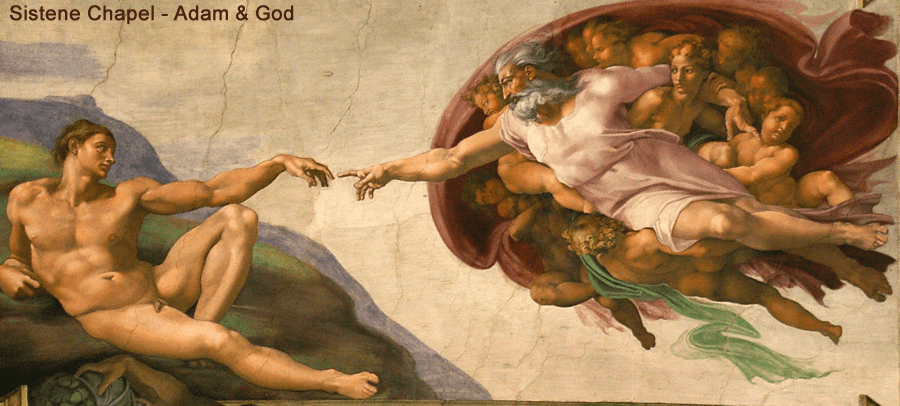
Mozart’s compositions of his symphonies, Michelangelo’s Sistine Chapel paintings, Archimedes eureka moment, Einstein’s Theory of Relativity, Darwin’s On the Origin of the Species and Buddha’s enlightenment are all examples of human experience of Divinity through their direct access to the ultimate source of Truth through which human knowledge and potential is forever being expanded.
How do we explore the existence of God?
From these examples it is clear that religion is not the only gateway to God, but He can also be experienced through other means including science, arts, philosophy and even our everyday life. However, since experiencing God requires stepping into the immaterial realm the disciplines of religion, spirituality, meditation, introspection, morality etc. may be more suited for this endeavour.
The more we immerse ourselves in these disciplines, stronger our experience of God. It is for this reason the founders of religion who managed to achieve a very high level of divinity in their lives were seen Godlike by their followers. From this logic it follows that there is nothing to stop a human being from achieving a level of divinity to qualify being called the “Son of God”.
Is God the ultimate complexity and mystery for human understanding?
The answer is yes. Intellectually the reality of God is too abstract to make much sense to a mind preoccupied with material life. It requires the use of metaphors and allegorical stories to overcome this difficulty which is what religion does. Can anyone suggest a more rational and simpler way to make the complex other worldliness of God comprehensible than to do it through human form of His son, messenger, prophet or incarnation? How is this logic any different to Einstein explaining the curving of spacetime due to gravity with the metaphor of a trampoline? Surely nobody thinks space time to be really a trampoline!
Why a multitude of Gods?
Science and philosophy tell us that no two people can ever observe the same things in the same way. It is for this reason God is perceived differently in different cultures and religion. These different perceptions are like different languages describing the same Truth which in no way changes the reality of God.
Questioning the multitudes of Gods and using it to criticise belief in God is like casting doubt on the existence of a Father whose multilingual children call him Père in French, Vater in German, Padre in Italian etc. The multitudes of Gods only reflect the different cultural lens through which different people perceive the One God.
Call it the language difference where different words are used to convey the same meaning. An abstract reality of God would make as much sense to the shepherds of Galilee as Quantum Mechanics, which is why God is represented using local allegorical language to make Him comprehensible and in a multitude of ways.
Scepticism about God
The naysayers reject the existence of God either on grounds of literal translation of the religious text or evaluating Him in scientific terms. But God is independent of religious text in the same way as Gravity which existed even before it was discovered and written about in text books. It should not really surprise anyone if the words or language fail to effectively communicate the reality of God which is so abstract and complex that we may not even have adequate words to describe Him?
Scepticism is an essential part of human condition which makes doubts about God natural. However, anyone categorically rejecting God can only do that by stepping in the realm of conceit and ignorance because the claim implies all knowledge. I am sure despite the amazing progress we have made in our understanding of our world, we are a long way from claiming omniscience. Didn’t we only a few hundred years back reject the possibility of air travel, leave aside visiting the moon? Does anyone really know how much we know in comparison to what is to know?
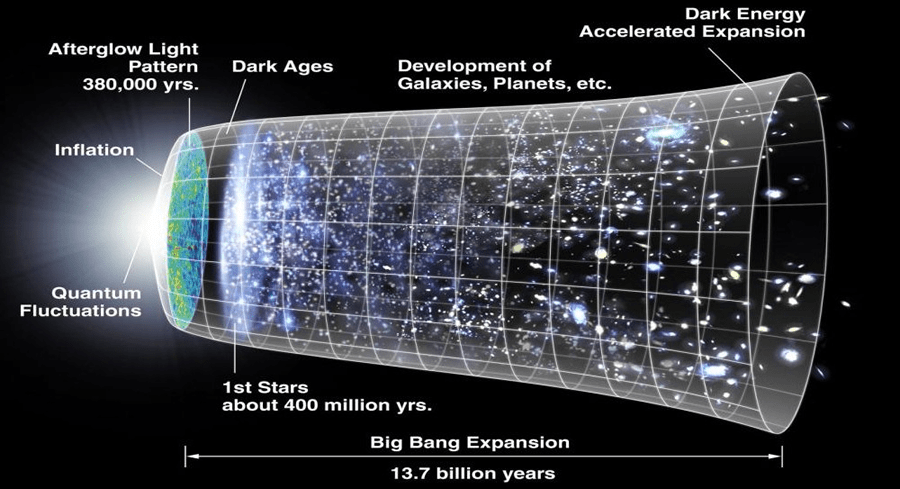
It surely is strange that the same scientists who readily believe in the miracles of the Big Bang where the universe was created out of nothing; Anthropic principle where everything in the universe is perfectly fine tuned for life; Origin of life arising from inanimate matter and Multiverse with an infinite number of universes, subscribe to an almost pathological denial about the existence of God! Could it be something to do with settling scores for the history of persecution and suppression of science by religion?
How to know God?
Like a Black Hole, God can only be known indirectly through experience. The more the experience the better you know Him. This makes the investment of time, effort, good intentions and morality indispensable in our efforts to discover and know Him.
It may help to remember that to confirm the existence of the elusive Higgs Boson particle it took science decades, billions of dollars and a Hadron Collider, a very complex experimental equipment requiring thousands of scientists from all over the world. Despite this the Higgs Boson particle was never observed directly but only through its indirect influence on observable particle tracks. And Higgs Boson is nowhere near the most intractable mystery of our existence!
If this is an accepted norm in the Scientific method, why do the sceptics demand confirmation about God’s existence in a two-hour debate without the least concern about the essential tools, knowledge and skills required to discover Him? The absurdity of trying to use the Scientific Method in an immaterial realm totally escapes them.
Can the God theory be tested?
Certainly. Let us consider the following questions.
- You have a choice between Universe having been created out of nothing or by God. Both are equally unbelievable and paradoxical possibilities, which one would you believe to be more likely?
- According to Second law of Thermodynamics the entropy of a system can never decrease. Which means that disorder should have continually increased since the Big Bang. Existence of life, which is an enormously high degree of order, is one of the many examples of suspension of our physical laws which can be termed a miracle. Could this suspension of physical laws be evidence of God’s hand in the creation of the universe?
- Consciousness is an integral part of the universe which interacts with matter, easily demonstrated in a simple double slit experiment. Despite efforts by sceptics to explain away consciousness it remains an enigma perhaps hinting that life instead of being an accident was predicated in the fabric of the universe. Where did this consciousness come from before the advent of life ?
- Quantum potential is an integral part of quantum mechanics. What is the source or driver for this potential? Could it be a part of the infinite potential we have defined as God?
Your answer to these few questions should help you decide your status as a believer or a sceptic.
So where does this leave us with the God Question?
There are only three possible answers to the God Question,
- God Exists
- God does not exist
- God may or may not exist
The above rationale totally discredits the “God does not exist ” arguments as asking for proof of God is disingenuous in the same way as asking for proof of Big Bang might be – none exists or is possible. There are only indirect inferences for both and you reach conclusions on both by using tools suitable for exploring their validity.
This narrows the Question down to the dual possibility of either Belief or Doubt in God.
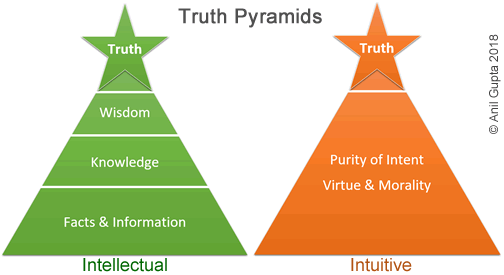
Since in scientific terms God represents a much higher degree of complexity than the Big Bang theory, it consequently requires a much greater intellectual capacity than humans have achieved so far. However, the path becomes a lot simpler if pursued intuitively as represented in the Truth Pyramids.
In recognition of the complexity of the Question we will continue further exploration of the topic in future blogs.
Muse
- Do we know enough about life and universe to be able to conclusively deny the existence of God?
- Can we deny anything on the basis of our feelings or within the limitations of our reason?
- Do we have any other option but to represent God in simple, familiar and sometimes contradictory metaphors?
- Is it possible for God, as the ultimate unity, to be contradictory in terms of human knowledge and perception?
- Should we question the disbelief in God with the same degree of scepticism as belief in Him?
- Have we used the specific tools of meditation, introspection, leading a life of virtue and morality to experience Divinity before coming to a conclusion about God?
Coming Next Week
The Malady of Belief Colour Blindness
