Cutting the Brexit Gordian Knot
Socrates (470 BC) suggested that questions were the most appropriate tools to get to the truth behind complex ideas. Can the wisdom of this very revered ancient help us make sense of the seemingly intractable problem of Brexit? Let us find out the truth of his proposition by articulating some fundamental questions about Brexit in pursuit of the truth.
What is Brexit?
Brexit is the shortened version of the decision taken for Britain to Exit the European Union at the 2016 EU referendum.
What is the Brexit debate?
The debate centers around the pros and cons of Britain leaving the EU with Brexiteers pushing for independence and Remainers desiring continued union with EU. Most of the arguments made by Remainers are based on the economic benefits of the union.
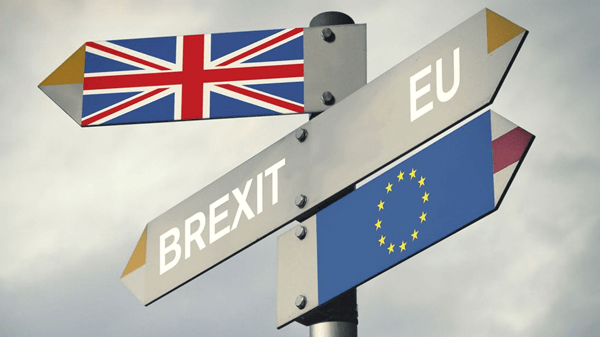
What is European Union (EU)?
EU is the political and economic union of 28-member states. EU policies aim to allow free movement of people, goods, services and capital. It also enacts legislation in justice and home affairs and maintains common policies on trade within the union. Having started life as a trading community, EU is incrementally morphing into a political union with the goal of creating a United States of Europe (USE).
The Union would have been a laudable goal, if it wasn’t for the fact that this goal is surreptitiously being pushed by the rich and powerful for their own political, ideological and financial vested interests with minimal participation of the citizens.
Is EU democratic?
EU is one step removed from its constituent nations as a result of which its leaders are not directly accountable to its citizens. While this makes it more democratic than Russia or China it is less democratic than Britain or India.
This is evident from the fact that while British electorate can throw Mrs May out of office, there is no similar mechanism to throw the EU leaders out. This leaves the leaders free to take decisions in total disregard of the wishes of its citizens.
This is also evidenced from the fact that UK’s Brexit negotiations have been fraught with endless debates, divisions and uncertainty, all hallmarks of a democracy. As the saying goes democracy is messy. On the other hand, EU has been able to present a strong, unchallenged and monolithic negotiating stance unhindered by any sign of dissent which accompanies any major decision in the life of a democratic nation.
Similarly, the unanimous approval of UK’s withdrawal and future relations on 25 November 2018 by 27 EU leaders after less than an hour’s discussion of the UK’s withdrawal agreement is reminiscent of the kind of rubberstamping of major decisions you will see in authoritarian regimes like China or North Korea.
While not in the same league, it surely is a symptom of undemocratic nature of EU governance? Can you find similar, almost unanimous, decision making in any democratic country? Can Britain with its historic mantle of “mother of democracy ” afford to compromise the very tradition that it gave to the rest of the world?
What are the vested interests in the Brexit debate?
As in a murder investigation, we must always look for motives in a debate like this. Most of the times you will find these motives to be self serving interests cleverly disguised as noble aspirations. The vested interests and corrupting influences of the different sides of arguments can be found in the following details about the main proponents in the debate:
EU – EU’s survival depends on member nations not being allowed to leave (Reminiscent of the East German Berlin Wall). If Britain leaves and succeeds outside the EU it would not only set a bad example for other nations who might be contemplating leaving but also undermine EU’s very raison d’etre. As a result, it will by necessity deploys all available tools of propaganda, economics and political arm twisting to fight for its survival.
Remainers – Most businesses, affluent people, intellectuals and bureaucrats belong to this group for reasons of economic benefits derived from expanded markets, financial interests in Europe, collectivistic ideology of socialism and greater power and influence. The opinion makers in this group, with their grip on most levers of power, fervently believe in their own wisdom and knowing what is best for the rest of the nation.
Brexiteers – Most people in this group are nationalists who believe in the primacy of their independence and culture. It also includes working class people most effected by the negative impact of globalism, mass immigration and political correctness in their everyday lives. EU to them represents the loss of any vestige of power they have to exercise their democratic will.
What is a nation?
A nation is defined as a stable and sovereign community of people, with a common language, territory, economic life, ethnicity, or psychological make-up manifested in a common culture.
Self governance, culture, shared beliefs, uncompromising control over geographic boundaries, freedom to enact laws, trading agreements and foreign policy are some of the core attributes which define a nation. It is useful to note that “economy ” is but a by-product of the more important attributes of sovereignty and culture which make a nation.
Is Britain a sovereign nation as an EU member?
The EU membership comes at a price where each member state must partially give up its sovereignty with the adoption of EU policies and laws which supersede national laws. The insurmountable difficulties faced by Britain, including the demand for a princely ransom for leaving, is clear evidence of its compromised sovereignty.
The EU’s ability to threaten Britain’s unity, economic and political wellbeing is only possible due to Britain’s unstated status of a protectorate. This is obvious from the fact that EU cannot exercise similar power over even the smallest independent nation on the planet. The window dressing provided by the apologists about member nations being independent in EU are hollow words designed to placate the sensibilities of citizens.
Does Project EU & Brexit have a history?
There is a long history of attempts by powerful European nations to unify the continent in a monolithic European empire and trading block. The aspiration was eloquently voiced by Victor Hugo at the Paris International Peace Conference in 1849 where he declared that,
“A day will come when all nations on our continent will form a European brotherhood …
A day will come when we shall see …
the United States of America and the United States of Europe face to face,
reaching out for each other across the seas “.
While welcoming trade, Britain throughout history has valiantly spearheaded the fight against threats to its freedom. Some notable past examples of Brexit are:
Brexit No. 1 – Henry VIII decision in 16th century to severe England’s long-established ties with the Papacy to assert its independence.
Brexit No. 2 – Britain’s successful campaign against Napoleon Bonaparte in 19th century to fight off his attempt to conquer and unify Europe.
Brexit No. 3 – Britain, led by Churchill, stood defiant against Hitler in 20th century, narrowly defeating his plan to conquer and unify Europe through his use of overwhelming force, intimidation and voluntary complicity by some European nations.
Brexit No. 4 – Is it possible that the age-old instinct for European unification has now metastasized in the form of the current Brexit battle? Does the nation have the courage and a leader of the calibre of Wellington or Churchill to once again emerge victorious?
Is it any surprise that after the past unsuccessful attempts with the use of Faith and Force as instruments of conquest, those wishing to dominate Britain will now resort to the weapons of Trade and Economy?
Understanding the Referendum Result
A clear majority of British Electorate voted to leave the EU. Any argument against this vote undermines our democracy as similar arguments can always be made in any election.
The claim that the people who voted for Brexit were duped and misinformed implies that 52% of the population which voted for Brexit was incapable of thinking for themselves, in other words dumb! Conversely, and seemingly by divine inspiration, all those who voted for Remain were better informed and more intelligent to make the right decision!
To propose that a major proportion of our electorate is stupid and xenophobic is a direct attack on one of the most cherished democratic concepts of one person one vote. Fascism, authoritarianism or theocracy start raising their ugly heads when people start claiming intellectual superiority verging on divine insights to support their argument over the democratic will of the people.
To propose a second “peoples vote ” is a transparent attempt to overturn the first “people’s vote” with the expectation that people will now vote Remain. But aren’t these the same people who were confident of a Remain outcome even the first time round? What if the second or the third referendum produced the same Brexit result? Wouldn’t this ideological extremism result in untold damage to our democratic traditions while further undermining our negotiations with EU?
Is it possible that the vote was split not on account of any misinformation (indulged by both sides), or stupidity on the part of the voters, but due to the fundamental instincts of socialism and nationalism that underpin all societies? The battle always being between individualism and collectivism. Brexit being the vote for individualism and Remain for collectivism.
Extreme versions of individualism and collectivism can both undermine a nation and require calibrated and measured balancing. We know that the balance has tilted dangerously towards collectivism when our freedom to voluntarily leave the membership of the EU threatens our unity, independence and prosperity.
What is the role of a leader?
The success or failure of the nation can depend on the direction and vision of its leader. It took a leader like Churchill to turn the stark disaster of Dunkirk in June 1940 into a glorious victory, not only for the nation but also for the whole world. He achieved this result not through seeking compromise but by having a vision and trust in the resilience and strength of the nation with a fierce belief in freedom at any cost.
To use the failures of leaders like Boris Johnson or David Davis to criticise the Brexit vote is nothing but spin. Most people voted for Brexit as a matter of principle and not under the influence of politicians. Corruption and weakness amongst politicians is not restricted to a single individual or one side of the argument. However, this failure does not excuse the failure of the one claiming the mantle of leadership as Prime Minister to deliver Brexit. Churchill would not have been forgiven for shrugging his shoulders and accepting defeat in the face of overwhelming force arrayed against Britain.
Mrs May’s core responsibility is to deliver Brexit. Nobody asked her to take the job. However, having volunteered, she must deliver a Brexit which means Brexit and not a shallow compromise which satisfies only the EU. She should remember that she is only accountable to people who elected her and NOT to EU. Instead of saying that in the absence of a deal Britain would be plunged into “uncharted waters ” or “chaos”, she should be doing everything in her power, and on a war footing, to prepare for a no deal Brexit. Sky is falling, as an excuse is not becoming of a leader!
What did Mrs May promise to deliver?
The Second Muse Commandment reads “Judge people by what they practice and not by what they preach. Actions speak louder than words”. So, how do Mrs May’s actions compare with her words?
In her campaign speech on 30 June 2016 for the leadership of the Conservative Party Mrs May emphatically stated
“First, Brexit means Brexit. The campaign was fought, the vote was held, turnout was high, and the public gave their verdict. There must be no attempts to remain inside the EU, no attempts to re-join it through the back door, and no second referendum. The country voted to leave the European Union, and it is the duty of the Government and of Parliament to make sure we do just that.”.
In her Lancaster House speech on 17 January 2017 Mrs May made clear that:
“Not partial membership of the European Union, associate membership of the European Union, or anything that leaves us half-in, half-out. We do not seek to adopt a model already enjoyed by other countries. We do not seek to hold on to bits of membership as we leave. We will no longer be members of the single market or customs union.
A smooth, orderly Brexit – we will seek to avoid a disruptive cliff-edge, and we will do everything we can to phase in the new arrangements we require as Britain and the EU move towards our new partnership.
But I must be clear. Britain wants to remain a good friend and neighbour to Europe. Yet I know there are some voices calling for a punitive deal that punishes Britain and discourages other countries from taking the same path.
That would be an act of calamitous self-harm for the countries of Europe. And it would not be the act of a friend.
Britain would not – indeed we could not – accept such an approach. And while I am confident that this scenario need never arise – while I am sure a positive agreement can be reached – I am equally clear that no deal for Britain is better than a bad deal for Britain”.

How much can a leader be trusted who promises one thing and delivers exactly the opposite, with a straight face? Is it possible that she is by design, or default, delivering her own preferred outcome of Remain ? Aren’t Mrs May’s beliefs and instincts similar to that of Chamberlain which resulted in his failed attempts to negotiate with Hitler? It was appeasement then and is appeasement now!
Is Brexit a divorce or a shakedown?
A lot is written about Brexit being difficult because of its divorce like messy nature. But let us consider if it really is a divorce.
Divorce is defined as the legal dissolution of a marriage by a court or other competent body. The process involves two sides with equal opportunity for presenting their case which is decided by a neutral authority governed by some case law and precedents.
So, assuming that we were in a marriage with EU, the questions to ask are,
- Are the two sides equal?
- Is the case being decided by a neutral court or authority?
- Are the case laws governing the process neutral?
With EU as the lawmaker, judge and jury the obvious answer to the question is NO.
But if not a divorce, what is it? The only term that can suitably describes the process is – Shakedown. The word shakedown is defined as the act of taking something, such as money from someone by using threats or deception. It is the favourite mode of negotiations by gangsters. Only in the case of Brexit we are not only being shaken down for money but also our freedom and sovereignty in a manner which might make Al Capone look like a parish priest!
What about EU Trade Dividend?
Trade is defined as a mutual and reciprocal activity voluntarily engaged by two parties. Most of the nations on the planet have a multitude of mutually beneficial trade agreements without a hint or pressure for a political union.
Britain as a part of the EU has trading arrangements in place which are based not on any favourable terms for Britain but based on mutual benefit. Statistics show that British exports to EU in 2017 were £274 billion (44% of all UK exports). EU exports to UK, on the other hand, were £341 billion (53% of all UK imports).
Based on above facts why would it only harm UK if EU was to slap tariffs on UK goods? Wouldn’t we reap a richer harvest by slapping reciprocal tariffs? If it inconveniences us wouldn’t it inconvenience the EU businesses exporting to us even more? Do we hear only one side of the argument because only one side is having a democratic debate where everyone has a voice? Could it be that in the EU, which is a monolithic entity, the individual concerns are ignored? The single, unfettered voice does strengthen the negotiation stance of regimes like China and Russia but only at the cost of sacrificing any pretence of a democracy.
As in war, the side that has most to lose makes the most concessions. With EU’s risk exposure being almost £70 billion more than that of Britain why are we the ones making all the concessions? EU risk exposure is large enough to sink the already weak economies of 3 or 4 EU member states which could trigger the unravelling of EU. Why is this not a negotiating strength for Britain which is the 5th largest economy in the world?
Would compromising the sovereignty, culture and laws of the nation justify the transient benefits of economic advantage? This is especially important considering that EU’s future is uncertain due to the inherent economic weakness of some of its member states and rising anti-EU sentiments amongst its population.
What about loss of EU workers and subsidies?
The partisan headlines shout that the loss of EU workers will bring the UK economy to its knees. So, there are these millions of European well-wishers sacrificing their national interest and families to come to UK to help keep our economy afloat. Really!!!
Workers come to UK to better their lives and for suitable employment opportunities not generally available in their own countries. If stopped from coming to UK they will become a liability for their native country adding to their unemployed and disaffected. Would it be a matter of concern for these nations?
Supply and demand are a fundamental principle of capitalism. If UK has a demand for labour it will be fulfilled by workers from EU or other nations. It is almost a force of nature and unstoppable. Just look at the flow of immigrants and drugs flowing from the southern border of USA. No amount of deterrence or legislation over the years has been able to stop that flow. All UK will have to do to maintain a supply of qualified workers is to create a well-regulated framework for the required talent to come into the country and come they will.
UK contributes £13.9 billion to EU, after rebates, out of which £4.4 billion gets credited back to the UK public sector. This amounts to a net contribution by UK of £9.4 billion annually to EU (Office of National Statistics). Considering this the argument about loss of subsidies is almost a joke for a nation that contributes almost twice as much to EU than it gets back. It does not take a rocket scientist to figure out that we can redirect all that money and still end up with a surplus.
Is Immigration a Straw Man argument?
A straw man is a fallacious argument based on giving the impression of refuting an opponent’s argument, while actually refuting an argument that was not presented by that opponent.
I am an immigrant and grateful to this nations laws and culture which allowed me to assimilate in this country almost seamlessly. So, it must seem almost counter intuitive for me to be arguing against immigration.
Firstly, like most Brexiteers I am NOT arguing against immigration but against uncontrolled immigration. There is a difference! While controlled and managed immigration can be a boon for a nation, uncontrolled immigration can destroy it. Immigration should be seen like a nuclear chain reaction which when controlled generates useful electricity but when run amok can produce a Chernobyl.
In a society where the national resources including those which effect the citizens directly like employment, health care, education and law and order are already stretched, any attempt to ignore them with usual palliatives and clichés is bound to fail and create ever increasing resentment.
This is important considering the low credibility of most politicians who always sing from hymn sheet of the day for political expediency, shamelessly ignoring the counter arguments they might have made in the past.
However, this does not stop the media and politicians from self-righteously labelling a large segment of society xenophobic just because they raise questions and concerns about immigration. If we can’t openly voice our concerns about the number of immigrants we can accommodate in our society than who can? Politicians – who will sell their souls to win a vote? Or Businessmen – who will strike a deal with the devil for cheap labour and bigger markets?
When the rich and powerful stop listening to their citizens it fractures society and gives birth to extremism. History teaches us that once released the genie of extremism will exact a heavy price before beings put back in the box again.
Does the power of Deterrence work?
After the second world war, the world avoided a potential catastrophe through the power of deterrence as exercised by the policy of Mutually Assured Destruction (MAD) practiced by both the nuclear super powers Soviet Union and USA. So, we know it works!
Also, consider the example of the July 2018 meeting between EU Chief Jean-Claude Juncker and President Trump. It only took an hour for a deal to be struck between the two leaders when President Trump strongly demanded a fairer trade agreement between EU and USA. Mr Juncker’s pre-meeting bravado melted like thin ice when confronted by a strong leader with beliefs in his cause.
So how does Mrs May’s efforts compare after her two years of negotiations with EU? Why didn’t she succeed? Was it because she is a meek leader with no belief and vision for fighting her corner? Why didn’t we counter the EU’s obdurate stance with threats to leave without a deal? Wouldn’t that have given EU something to think about? However, words by themselves mean nothing unless backed up by actions. EU was aware that Britain was not making any preparations to leave without a deal, so they exploited our weakness by offering a deal that most suited them.
By not preparing for Brexit vote at the referendum, or a no deal scenario in Brexit negotiations our politicians almost intentionally chose failure as their preferred outcome. Words, lukewarm intentions, compromise and the polished art of expediency might help win political leadership but utterly fails as a negotiating strategy in business and international diplomacy?
With no deterrence and as an avowed Remainer, Mrs May lost the battle for Brexit even before the first shots were fired. EU’s strident and bullying manner offering a “take it or leave it deal” does not constitute a negotiating stance. It is more reminiscent of the strong arm tactics prevalent amongst the Mafiosi. The only thing that was missing was perhaps the threat of the head of a dead horse in bed!
Is No Deal Brexit a viable option?
It sure is if history is any guide. After the second world war British economy was on its knees, as was that of most of Europe. It recovered not because of membership of any collective, but by deploying its natural cultural resources of Can-Do attitude, Risk Taking and Innovation to come out of one of the most difficult periods in its history.
If EU membership helps with the prosperity of nations, why are Greece, Italy and Spain suffering with poor economies and high unemployment?
The prosperity of every nation is the result of its culture, its laws and institutions. Trade deals and agreements are marginally helpful but not the main cause for a nation’s prosperity. The myth of our dependence on EU for our success being engendered in the younger generation by the chattering classes and intellectuals is only making them addicted to dependency. The greater this dependency easier will it be for the rich and powerful with vested interest to exploit them. Stalin is attributed with calling such people “useful idiots ” because they could be easily manipulated to fight for causes which undermined their freedom and long-term prosperity for the immediate lure and gratification of thirty pieces of silver!
And most importantly despite its bravado EU will not allow for a No Deal Brexit because it has more to lose than us. In such a situation you will quickly see the power of deterrence kick in!
Conclusion
Considering its importance we must ensure that our decision on Brexit is not based on the fear of the unknown but on known and age old cherished national principles which have sustained Britain throughout history.
Should we be selling our national soul represented by our culture and sovereignty for a few pieces of silver? The answer to this depends on how much we value our way of life and independence.
In the final analysis it may be useful to remember that we are all like the 5 Blind Men with a very subjective glimpse of the truth. Asking questions and scepticism are the only reliable means for drilling down for the truth.
Muse
- Does the Socratic questioning help unravel the complexity of the Brexit debate?
- Does it help re-evaluate our assumptions and beliefs?
- Does it expose propaganda and misinformation?
- Does it strengthen our mental truth seeking muscles?
- Link to my previous Brexit blog of 15 May 2018
